



It does not receive public funding
Editor in chief:
CLARA MOSCHINI
With the ban on advertising for HFSS (High Fat, Sugar and Salt) products before 9pm on TV and at any time online coming into force on 5 January 2026, the UK is taking one of the most restrictive regulatory steps globally in the field of food policy (read EFA News ).
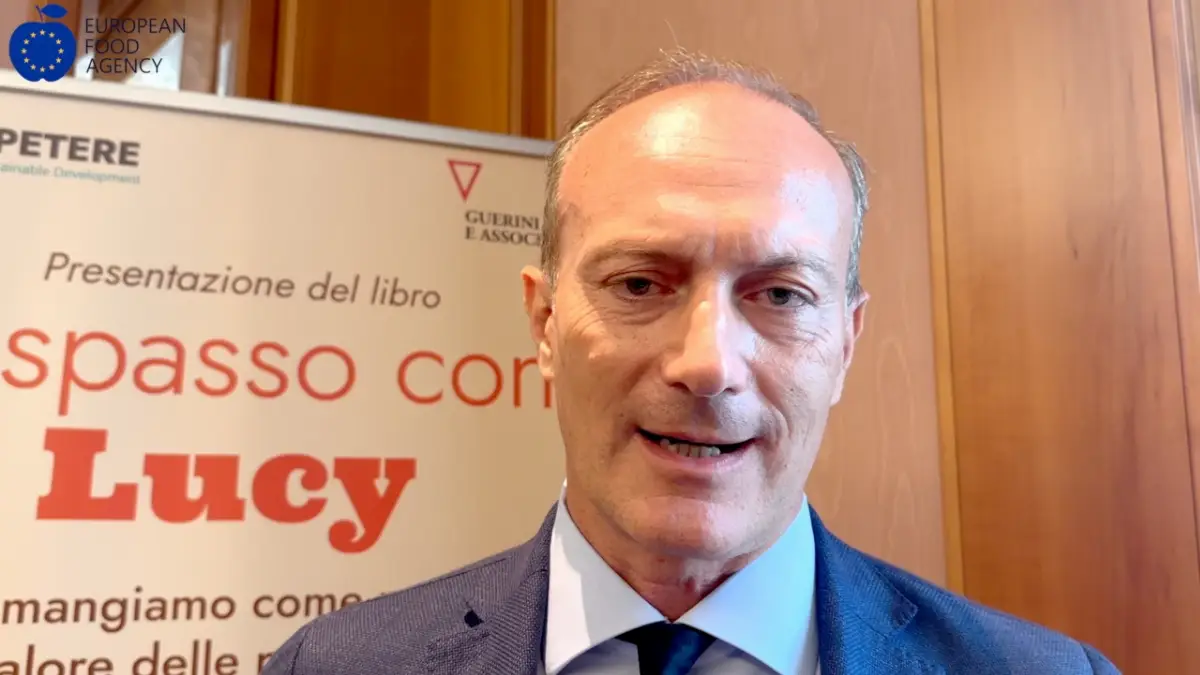
The stated goal—reducing children's exposure to promotional messages and combating childhood obesity—is legitimate. The chosen method, however, "reflects an ideological, unscientific, and poorly experimental approach, which resorts to regulatory shortcuts and struggles to address obesity and cardiovascular disease in their true biological, behavioral, social, and cultural complexity," explains Pietro Paganini , professor at John Cabot University in Rome and Temple University in Philadelphia, and president of the Competere.eu association.
"The paradox is evident," Paganini observes. "The United Kingdom, along with Italy, stands out for taking the problem of childhood obesity seriously, but it risks tackling it in the worst possible way, setting a precedent that could become a dangerous regulatory benchmark, closely watched even beyond its national borders. The first issue concerns the tool used: the Nutrient Profiling Model (NPM), a model developed between 2004 and 2005, which classifies very different products as 'less healthy' based on an algebraic sum of 'positive' and 'negative' nutrients, which is also the origin of the Nutri-Score. This reductionist approach continues to evaluate foods as isolated entities, ignoring the context of consumption, portion sizes, frequency, lifestyle, and individual responsibility."
The practical consequences are clear. As with the Nutri-Score, many traditional products, including foods that are symbols of European and Italian food culture, "risk being penalized not for abuse, but for their very composition. This results in a reduction of competition and a high barrier to entry for new HFSS products, which become effectively invisible from a communication perspective. Reformulation is often cited as a solution, but it is not always technically possible, nor culturally neutral," Paganini emphasizes. "It is true that the regulation distinguishes between product advertising and brand advertising, allowing 'brand-only' campaigns as long as they are not attributable to HFSS products. However, the so-called consumer-perception test introduces a gray area that increases legal uncertainty and reinforces a climate of defensive caution, especially for SMEs."
Even more delicate is what lies ahead. In the United Kingdom, proposals and discussions are underway regarding "healthiness targets" for large retailers, which would establish "average healthiness" targets for their offerings, calculated through weighted sales based on specific nutritional scores. Under this scheme, supermarkets could be monitored, and potentially penalized, if they fail to meet certain aggregate targets for sugar, fat, and salt.
"It's important to clarify that these proposals do not currently amount to a ban on the sale of individual products," emphasizes the president of Competere.eu. "However, their potential impact is far from neutral. Shifting regulation from communication to supply structure means exerting indirect but systemic pressure on businesses, incentivizing forced product reformulation and discouraging the market entry of foods that don't conform to predefined administrative parameters. This results in market distortion, which tends to favor large retailers and operators capable of engineering products to comply with government regulations, to the detriment of traditional products, cultural supply chains, and culinary diversity. This mechanism risks seriously hindering, if not driving out of the market, numerous companies that are unable or unwilling to alter their recipes."
This picture reveals a "worrying ideological shift: no longer prevention policies based on information, education, and accountability, but a progressive engineering of the food market. The risk," according to Paganini , "is that of a standardization of recipes, a stifling of entrepreneurial creativity, and a regulatory selection of products, where what survives is not what consumers choose, but what meets the criteria established by the public authority. This shift brings the system closer to the idea of 'guided taste,' if not a true state taste."
Unlike the United Kingdom, Italy recently introduced the first comprehensive law on obesity (see EFA News ), "choosing a different path: education, prevention, and accountability, rather than rigid classifications and blanket bans. An imperfect approach," argues Paganini , "but more consistent with the complexity of the phenomenon and the idea that health cannot be built by decree." The British case is not just a national issue: according to Paganini, it is "a political and cultural test for Europe. The fundamental question remains open: are we truly addressing the complexity of obesity, or are we replacing complexity with dangerous regulatory shortcuts that risk producing more side effects than lasting benefits?"