


It does not receive public funding
Editor in chief:
CLARA MOSCHINI
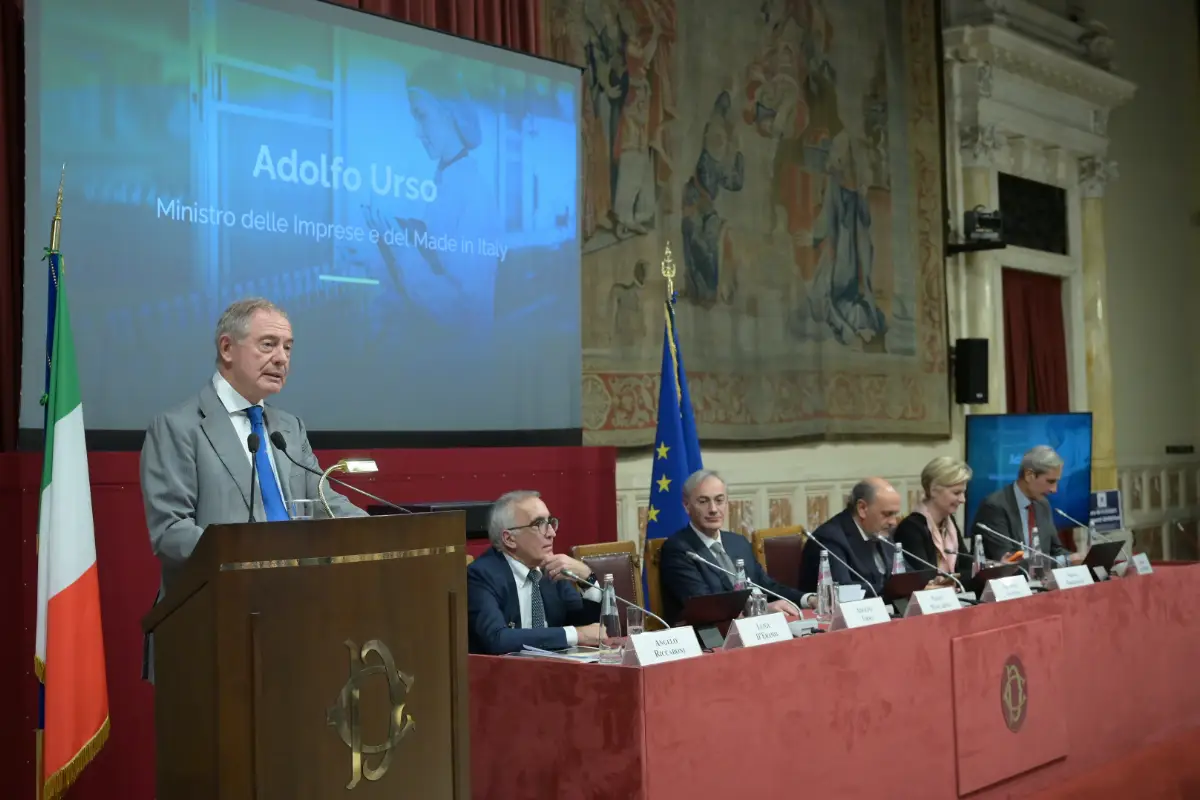
The 2026 Report, “Toward Sustainable Competitiveness,” presented to the Chamber of Deputies
Combining economic profitability, land conservation, environmental protection, social equity, and individual and collective well-being is no longer just an ethical choice, but a key strategic lever for the competitiveness of Made in Italy agri-food products. These are the findings of the 2026 Report “Towards Sustainable Competitiveness,” promoted by Federalimentare (the association that brings together the entire Italian food industry), developed by the Santa Chiara Lab of the University of Siena, and presented to the Italian Chamber of Deputies. The Report paints a picture of a sector in excellent condition which, in addition to strong economic growth, has made significant progress in environmental, employment, and competitiveness terms.
The food industry is consolidating its position as the country’s macroeconomic pillar due to its added value (€42.3 billion in 2025), with a positive trade balance of €14.3 billion, driven by the value of Made in Italy products, including the 897 PDO, PGI, and TSG labels that make Italy a European leader in certified and protected products. The industry’s competitiveness is also increasing thanks to its employment dynamics, with the sector growing faster than its European counterparts, employing 524,500 people, a 43% increase compared to 2010. The sector also stands out for its contractual stability: 75.9% of contracts nationwide are permanent.
The food industry’s investments in sustainability and ecological transition are proving effective both in increasing production and reducing environmental impact. Between 2008 and 2024, direct greenhouse gas emissions decreased by 27%, while production increased by more than 12%. Energy efficiency figures are also positive, with a 0.9% decrease in consumption between 2010 and 2024, despite an 11.3% increase in production. This highlights how growth in industrial production has kept energy requirements stable.
Italy confirms its leadership in the circular economy: 75.6% of packaging has been recycled nationwide, far exceeding the EU average of 67.5%. These figures are the result of concrete initiatives, ranging from self-production and purchasing of renewable energy to energy and water efficiency, heat recovery, the recovery of waste and by-products, packaging innovation, digitalization, and traceability.
The path to transparent and digitalized reporting is now clear, partly to protect companies from reputational risks and greenwashing. Fifty-eight percent of companies evaluate their suppliers according to ESG (Environmental, Social, and Governance) criteria, parameters used to measure a company’s sustainability, ethical responsibility, and long-term impact. Added to these are attention to the environment and fairness, the use of new technological solutions, and corporate governance, which can help address not only the climate and social transition but also other crucial issues for our businesses, such as demographic decline and the digital transition.
During the presentation of the report, Adolfo Urso, Minister of Enterprise and Made in Italy, highlighted the “positive results” achieved as “the fruit of the commitment of businesses and workers, who constitute the true wealth of the sector, and of the ability to innovate through new technologies. This is the virtuous model we want to promote in Europe too, starting with concrete results and valorizing the people who contribute every day to the success of our products,” the minister concluded.
For his part, Paolo Mascarino, president of Federalimentare, observed: “The Report paints a picture of a sector in excellent condition. The data tells us that all macroeconomic indicators are positive, and that investments in decarbonization and sustainability are paying off in terms of lower CO2 emissions while industrial production continues to grow. This means that the industry, despite geopolitical challenges and rising energy costs, is meeting its own energy needs by increasing production and reducing emissions. The food industry as a whole is therefore responding very effectively to the challenges of competitiveness and the environmental transition, ensuring the sector’s productivity and social and economic sustainability. This solidity is also reflected in steadily growing employment levels.”