



It does not receive public funding
Editor in chief:
CLARA MOSCHINI
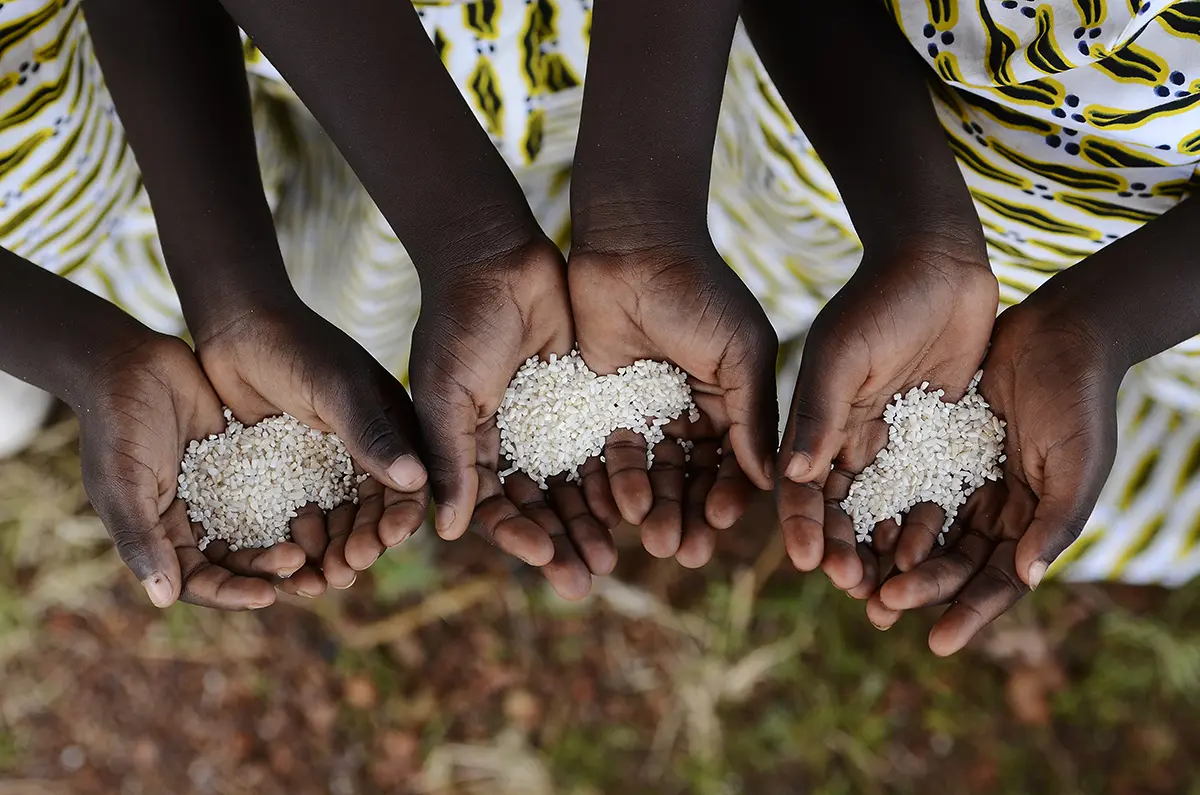
The new SOFI (State of Food Security and Nutrition in the World) report, released this morning by five United Nations agencies, reports that 645 million people (ranging from 608 to 696 million), or 7.8% of the world's population, will suffer from hunger in 2025. In addition, over 2.1 billion people are moderately or severely food insecure.
Despite a slight reduction compared to the previous year, amounting to 14 million fewer people, the number of people suffering from hunger remains higher than pre-pandemic and masks a significant divide. The global decline is due to progress in Latin America, the Caribbean, and Asia, while it is growing in Africa, where the number of people affected by hunger has reached 309 million, equal to 1 in 5 Africans, and for the first time exceeds that of Asia (292 million). In just 15 years, the African figure has nearly doubled, as a result of conflict, displacement, climate crises, and economic shocks, making the African continent the new epicenter of world hunger.
Other figures also confirm the greater severity of the situation in Africa: 56.6% of the population experiences moderate or severe food insecurity, and 66.6% cannot afford a healthy diet (compared to 28.9% in Asia and 25.7% in the Caribbean). Regarding minimum dietary diversity, Africa has the lowest levels in the world: 20.5% among children aged 6 to 23 months (global average 30.8%) and 43% among women aged 15 to 49 (global average 62.7%).
The 2026 edition of the SOFI Report's in-depth analysis of the challenges posed by the high cost of a healthy diet calls for further reflection. In 2025, nearly a third of the world's population (32.7%) could still not afford a healthy diet, and the cost has continued to rise, reaching $4.28 (at purchasing power parity), demonstrating the effects of food inflation. With respect to the report's stated goal of reducing food prices, Action Against Hunger notes that the cost of healthy eating is an important indicator, but cannot guide public policy alone; it is also necessary to analyze all the causes of price dynamics and understand the implications for the incomes of small-scale food producers. It is therefore essential to address inequalities and power imbalances along the entire food supply chain, from production to consumption. The fight against hunger must therefore involve transforming food systems, placing peasant agroecology and local agriculture at the center of this process. The right to food must be placed at the forefront of political priorities.
"With 645 million people suffering from hunger, the right to food remains one of the most violated human rights, especially in Africa," says Simone Garroni , Director General of Action Against Hunger. "The slight decline recorded, four years from 2030, actually leaves us light years away from the Zero Hunger Goal. And the recent cuts in humanitarian aid by many Western governments, combined with increases in military spending, clearly demonstrate that the political agenda must change and put the right to food back at the center," concludes Garroni .