


It does not receive public funding
Editor in chief:
CLARA MOSCHINI
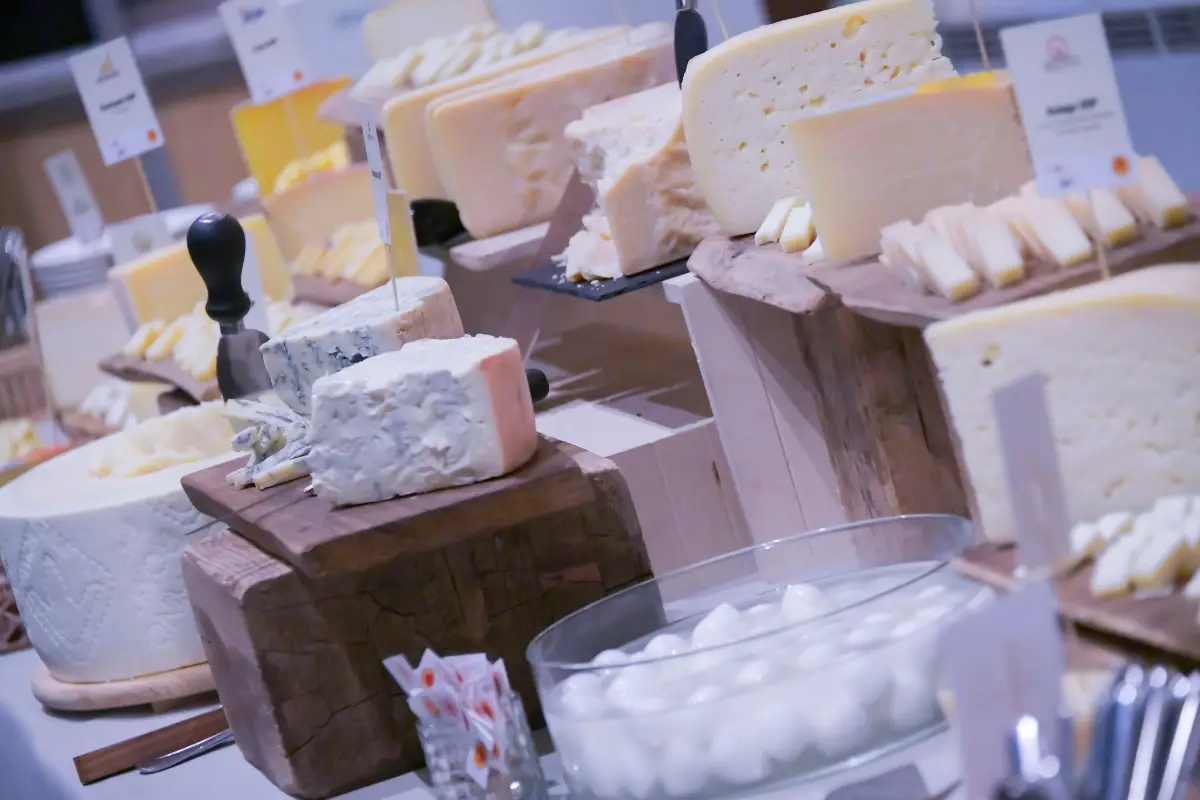
Italian cheese exports are breathing a sigh of relief: Chinese authorities have announced a reduction in the tariffs they had planned to impose starting December 23, 2025. Shortly before Christmas, Mofcom, China's Ministry of Commerce, announced provisional tariffs ranging from 21.9% to 42.7% on a range of dairy products, including fresh and processed cheeses, as well as milk and cream (see EFA News ). Now, the ministry has announced a new tariff range of between 9.5% and 11.7%.
A breath of fresh air, therefore, for one of the key sectors of Made in Italy food, with exports worth approximately €6 billion. Beijing's MOFCOM initiative was based on an anti-subsidy investigation launched by Chinese authorities in August 2024. The investigation, expected to conclude in February 2026, has always been considered a retaliatory measure against Brussels, having been launched the day after the European Union announced it would impose high tariffs on electric vehicles produced in China.
Beijing now appears to have come to a more moderate conclusion, likely after the Ministry of Commerce drew initial conclusions in recent days on the progress of the China-EU consultations on the EU anti-subsidy case regarding Chinese battery-electric vehicles. As Mofcomm itself announced in an official statement, "in order to implement the consensus of the China-EU Summit and adequately resolve the EU anti-subsidy case regarding Chinese battery-electric vehicles, China and the EU have conducted several rounds of consultations in a spirit of mutual respect."
"Both sides," the statement explains, "deem it necessary to provide general guidance on price undertakings for Chinese exporters of battery electric passenger vehicles (BEVs) to the EU, enabling them to address related concerns in a more practical, targeted and WTO-consistent manner."
"To this end," the Beijing statement continues, "the EU has published the Guidance Document on the Submission of Price Undertaking Offers, in which the EU acknowledges that it will evaluate each price undertaking offer against the same legal criteria in an objective and fair manner, following the principle of non-discrimination and in accordance with relevant WTO rules."
The progress, MOFCOM's statement continues, "fully reflects the spirit of dialogue and the outcomes of the consultations between China and the EU. This demonstrates that both China and the EU have the capacity and willingness to appropriately resolve differences through dialogue and consultation within the framework of WTO rules and to preserve the stability of automotive industrial and supply chains in China, the EU, and globally. This not only helps ensure the healthy development of China-EU economic and trade relations, but also safeguards the rules-based international trading order."
Satisfaction of Assolatte
Be that as it may, the news of the reduction in Chinese tariffs is beneficial for the Italian dairy sector, as Assolatte confirms. "The new tariff level," commented President Paolo Zanetti, as reported by Il Sole 24 Ore, "is undoubtedly a relief for the sector. With a maximum tariff of 11.7%, the market remains viable. Credit for this goes to the coordinated work of the European Commission, national governments, and the companies involved, many of which are Italian, but also French and Spanish."
"This is undoubtedly a positive result," adds Zanetti , "which mitigates a penalty we have once again suffered for reasons completely unrelated to our sector. This result also compensates us, at least in part, for another disappointment: being completely excluded from the recent EU-India agreement. The dairy sector was, in fact, excluded from the negotiations due to the ban in India on the use of animal rennet, which is unsuitable for vegetarian consumers, such as the majority of Indians. This is a decision we have been unable to counter in any way, not even by proposing a specific labeling requirement."
The decision to impose tariffs of 42.7%, Assolatte emphasizes, "had interrupted a significant growth trend. In 2024, our shipments to China had increased by 31% compared to the previous year." Since the provisional Chinese tariffs were introduced, Italian cheese exports have fallen 17% in quantity and 20% in value. Italy currently exports approximately 10,000 tons of cheese to China, with a turnover of €70 million, and is the EU's leading player, given that European cheeses as a whole generate a turnover of €185 million in China.
"75% of the 10,000 tons shipped to China," adds Zanetti , "are mascarpone. The Chinese have a real predilection for tiramisu. There isn't a restaurant in Beijing, certainly not in the inland areas, that doesn't have this famous Italian dessert on the menu. Furthermore, the Chinese believe that Italian mascarpone is by far the best raw material for making it." The other 25% of Italian sales are made up of Grana Padano, Parmigiano Reggiano, Gorgonzola, and cow's milk mozzarella.
"The new tariff level," Zanetti concludes, "is undoubtedly a relief for the sector. With a maximum tariff of 11.7%, the market remains viable. Credit goes to the coordinated work of the European Commission, national governments, and the companies involved, many of which are Italian, but also French and Spanish."