



It does not receive public funding
Editor in chief:
CLARA MOSCHINI
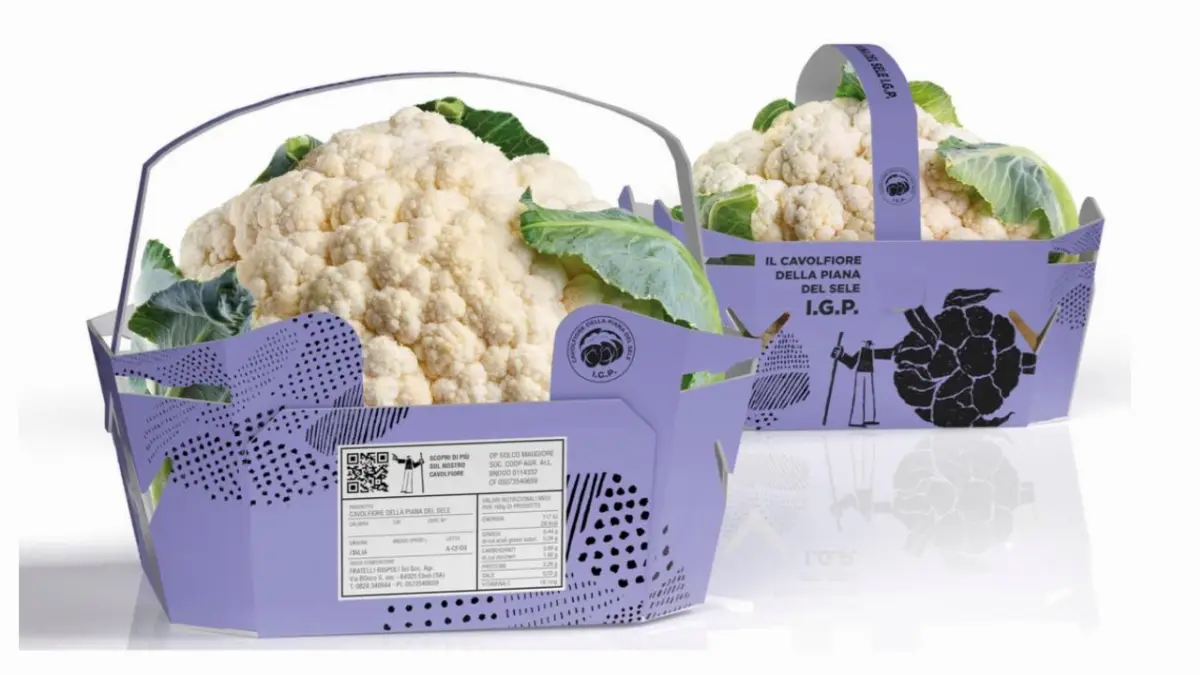
The second National Brassica Day brought together academic experts, seed companies, distributors, protection consortia, and international players at the Royal Palace of Portici, south of Naples, to discuss varietal innovation, sustainability, nutritional values, and marketing strategies. The focus on cauliflower brought together scientific research, genetic improvement, territorial promotion (PGI), and new opportunities for large-scale retail trade, confirming the supply chain's central role in the Italian and European horticultural landscape.
"Cauliflower," said Stefania De Pascale , full professor of Horticulture at the Department of Agriculture at the University of Naples Federico II, "is a species highly sensitive to temperature and therefore particularly exposed to the effects of climate change. But the supply chain is undergoing significant evolution: new, more resilient varieties, forecasting tools based on degree days, precision irrigation, and reduced inputs are making cauliflower a model crop for the ecological transition. Commercially, the product is changing its identity: the first PGI (Protected Geographical Indication) has been created, and now the traditional market is shifting to the ready-to-eat and plant-based segments, with growing interest from large-scale retail trade."
Production is growing. This is confirmed by data presented by CSO Italy director Elisa Macchi . With 358,000 tons (2022-24 average), Italy ranks eighth in the world and second in Europe behind Spain. Organic production is also growing, at 12,200 tons. The top five producing regions are Puglia, Campania, Abruzzo, Sicily, and Calabria. Exports, especially to Germany, Poland, and Austria, are still modest at 6,000 tons, while imports more than double (15,000 tons) due to the effects of climate change on domestic production, which, however, has recovered thanks to new resilient varieties. Indeed, innovation in this vegetable is strong and constantly evolving, as illustrated by experts from HM.Clause, Bayer Seminis, Enza Zaden, Esasem, and Assosementi, who participated in the first roundtable discussion of the Day.
Prices are volatile, as is the case with all fruit and vegetable production, but cauliflower is experiencing a positive and significant trend. The presence of the first Italian and European PGI, Cauliflower of the Sele Plain PGI, is changing the rules of the game, even though it has only been active for a little over a year. Producers who have joined the Consortium have received a stable price of €1.80 per kilo, an average of 55 cents higher than the produce of their non-PGI peers during the current season (which is not among the best). Large-scale retail trade is confident in this. And in Portici, Annamaria Medici , head of the fruit and vegetable supply chain at Multicedi, has proven it with data in hand. The presentation of the product in a convincing and distinctive packaging has facilitated the rapid entry of the PGI cauliflower into an unexpected number of large-scale retailers, as explained by the general director of the Consortium Antonio Vocca and the strategy manager of La Grande Bellezza Italiana Leonardo Odorizzi , who accompanied the Consortium in its growth.