



It does not receive public funding
Editor in chief:
CLARA MOSCHINI
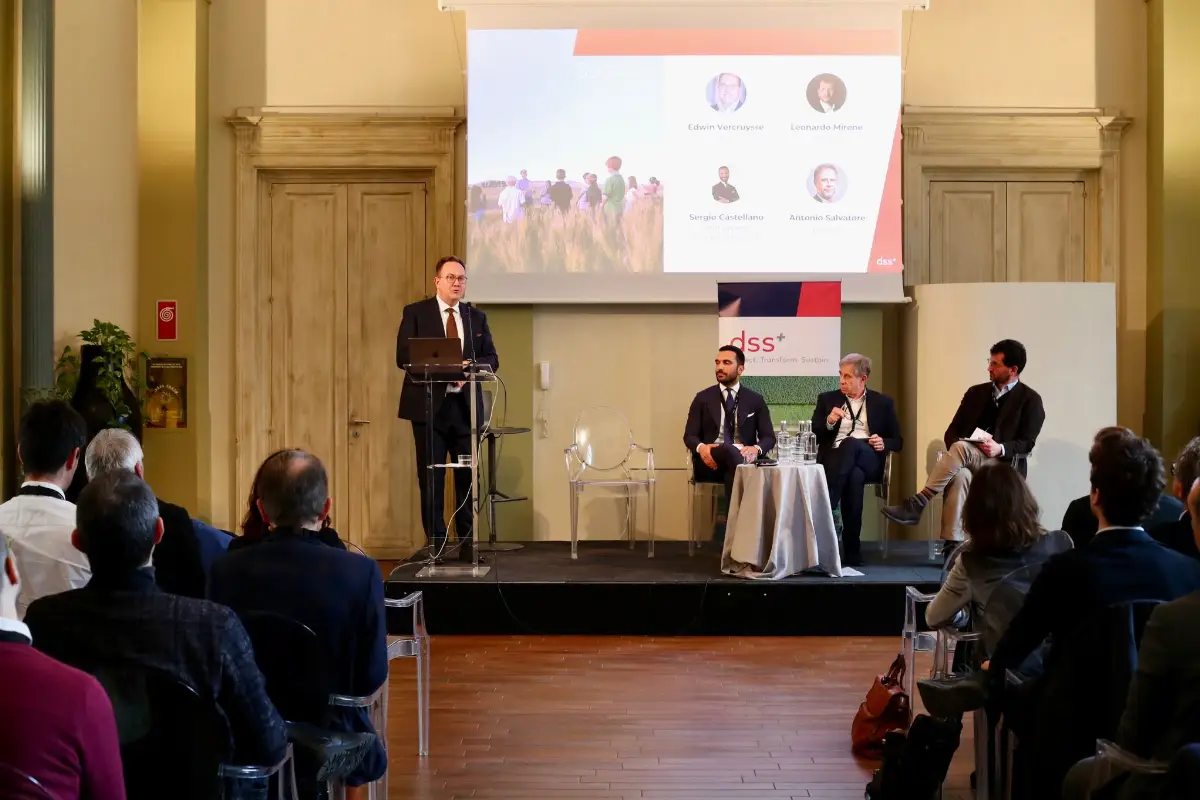
In the food industry, performance is increasingly dependent on the ability to remain efficient while everything changes: unpredictable costs and markets, margins under pressure, stricter safety requirements, a shortage of specialized personnel, and growing complexity. “In this context,” according to Edwin Vercruysse of the global consulting firm Dss+, “the balancing point is assisted by good operational maturity that allows day-to-day management to adapt to the changing context.”
Below, there is a wider reflection by Edwin Vercruysse on these topics.
Operational discipline: the real dividing line in the food industry
When there is a lack of maturity, an “emergency logic” takes hold: we focus on the most visible symptom, not the cause. Emergencies take time and prevention fades into the background, meanwhile the dashboard of indicators is limited to reporting results, neglecting continuous monitoring.
Hence a recurring paradox: investments in technology and improvement programs are made, but results remain unstable because the tools, on their own, do not represent an operating model. Without routines, clear roles, and constant monitoring, every initiative produces a peak in results and then fizzles out.
The signs of reactive systems are always the same: fluctuating performance, inconsistent quality, waste that becomes the norm, different decisions on the same problem, poor repeatability. In an industry where margins and compliance leave little room for improvement, repeatability is not a technical detail: it is a strategic choice.
To escape reactivity and initiate proactive management, a shift in focus is needed: shifting the focus from solving to governing, anticipating change so as to make decisions and corrections in a methodical way, and also organizing work in a short and pragmatic way, essential indicators, and simple escalations.
Humex: working on operational excellence
The Humex approach of Dss+ fits into this framework, used in organizational transformation programs to bridge the gap between ambitions and daily behaviors. The focus is on execution discipline through improved operational leadership, simple management and communication systems, and rapid and effective operational routines. With a simple and proactive system, performance no longer depends on individuals’ “goodwill” and it becomes a stable organizational capability, with shared criteria for analyzing trends and planning responses, preventing problems from being passed from a shift to another.
As Massimo Marino, from the Food & Beverage Industry at Dss+, explains, “The effects are visible: more stable processes, better performance, more consistent quality, and less waste. Based on many years of experience and numerous projects, Dss+ estimates that in the Food & Beverage industry, the impact of operational discipline improvement projects is measurable with an average 15% increase in productivity, a 10% reduction in indirect labor costs, and a reduction in product waste of up to 34%. (Source: Dss+/ProAction International calculations). The human factor also changes: clear expectations, more stable priorities, fewer untrue emergencies. It is a benefit for operational safety and engagement, since people are no longer forced to compensate for system flaws and continuous improvement becomes a daily occurrence.”