


It does not receive public funding
Editor in chief:
CLARA MOSCHINI
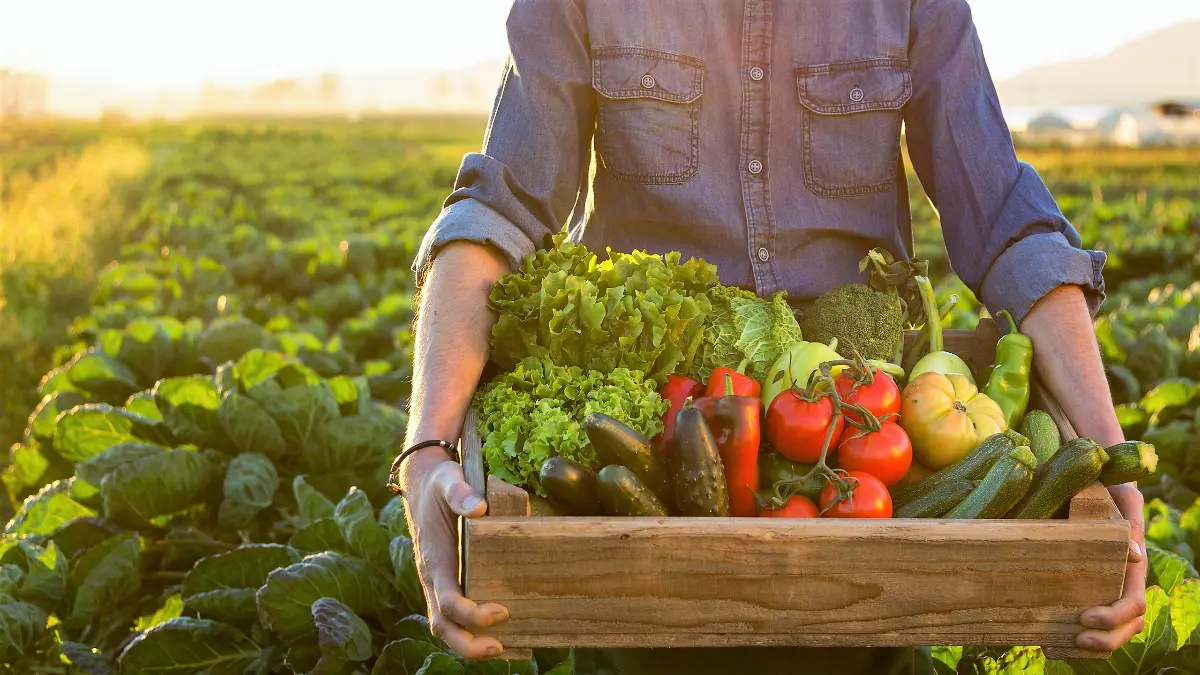
A driving force for the Italian economy, resilient to the numerous external shocks that have occurred over the decade, and a leading player in Europe with several records. This is the picture of the Italian agri-food sector painted by ISMEA in its Annual Report, presented today in Rome in the presence of the Minister of Agriculture, Food Sovereignty, and Forestry, Francesco Lollobrigida .
The solid fundamentals of both the agricultural and processing sectors confirm the agri-food sector as a cornerstone of the national economic system, accounting for 15% of the national GDP if we consider the entire supply chain, from field to fork.
Italy's records in Europe
The 2025 ISMEA Report confirms Italy's leadership in the European agri-food sector, with excellent results in multiple strategic areas:
These achievements are accompanied by the "extraordinary performance" of agri-food exports, with a value approaching €70 billion in 2024 and a trade balance that increased from a €6 billion deficit in 2015 to a €2.8 billion surplus. The positive trend continued in 2025, with exports increasing 5.7% in the first nine months. The performance in the United States is particularly significant, where sales of Italian products reached €7.8 billion in 2024, a 17.1% jump from 2023.
The challenges: geopolitical tensions and new tariffs
Alongside the many positive findings, the report highlights complexities, all external to the sector, linked to a global geopolitical landscape marked by uncertainty and conflict, in a transitional phase of international economic relations and a return to trade protectionism.
The new tariffs introduced by the United States in 2025 represent a particularly sensitive issue, which is explored in depth in the Report. Assessing their impact cannot ignore the specificities of individual sectors, the degree of substitutability of Italian products on the North American market, and exchange rate dynamics, which impact trade to a similar extent as tariffs.
More generally, under the July 2025 US/EU agreement, the agri-food sector, burdened by a weighted average additional tariff of 12.9%, is less affected than that of other countries, but relatively more penalized than sensitive industrial sectors, for which the EU has secured more favorable treatment.
The situation, however, remains evolving, as it is still heavily influenced by operators' expectations. A more accurate assessment of the tariffs' impact will only be possible starting in mid-2026.
Over 15 billion euros from the Government in the last three years
Over the past three years, the Government has mobilized over €15 billion for the sector to strengthen supply chains, innovation, and youth employment in agriculture. The implementation of the National Agricultural Recovery and Resilience Plan (PNRR) has increased the resources managed by the Masaf (Masaf) from €3.6 billion to €8.9 billion. Among the most significant interventions is the "Supply Chain Contracts Fund (FCF)," whose funding has been increased by an additional €2 billion, for a total of €4 billion.