



It does not receive public funding
Editor in chief:
CLARA MOSCHINI
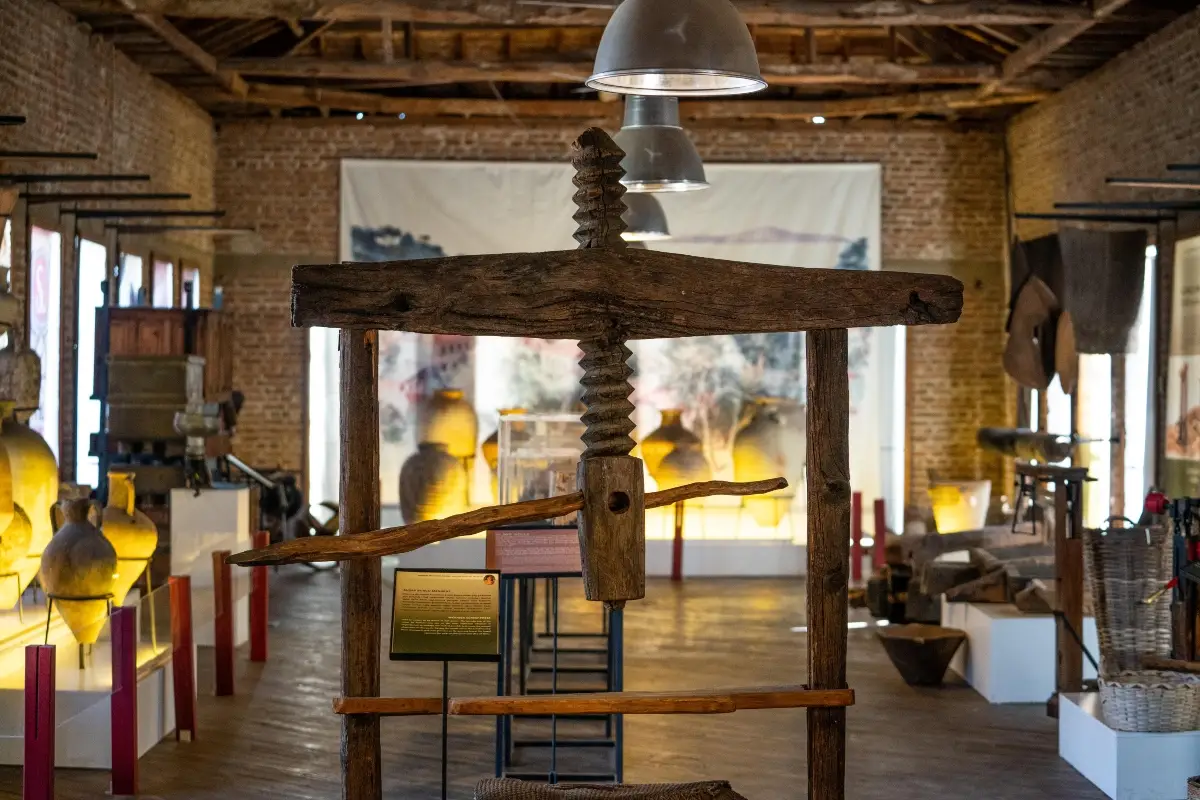
In the small village of Orhanlı, on the hills overlooking the Aegean Sea in the province of İzmir, a project destined to redefine the story of olive oil is taking shape. It's the Yücel Sönmez Olive Oil Library, the world's first library entirely dedicated to extra virgin olive oil, housed within the Sevilma Garden, described as Turkey's first "Slow Food Farm."
The project is part of a growing international focus on quality olive oil and new forms of experiential tourism linked to production areas. In this context, Orhanlı aims to be a new point of reference for those working along the supply chain and for those developing olive oil tourism offerings.
The setting is a historic olive-growing landscape, where olive cultivation has been an integral part of local communities' lives for over 250 years. Sevilma began as an agricultural enterprise rooted in Anatolian tradition, yet oriented toward a contemporary agroecological model, attentive to sustainability and the valorization of the local area. The library represents the natural cultural progression of this journey: from olive groves to the creation of a broader awareness of the quality, origin, and identity of olive oil.
Dedicated to journalist Yücel Sönmez , a longtime travel editor for Hürriyet Seyahat who passed away in 2025, the library collects his narrative legacy and translates it into a tool for interpreting the global olive oil landscape. The title is not only commemorative, but programmatic: here, oil is treated as a story, a form of journey that traverses territories, productive cultures, and communities.
The shelves aren't filled with books, but with a selection of 90 oils from Anatolia, Europe, Asia, Africa, and the Americas: one of the first structured collections to bring together oils from five continents in a single physical space. The collection is constructed as a comparative map of contemporary olive growing, designed to compare origins, varieties, extraction techniques, and agronomic approaches, and destined to grow through the direct involvement of producers and territories.
The heart of the project is guided tastings, conceived as true "sensory readings." In the absence of books, the nose and palate become interpretative tools: each tasting allows us to appreciate the differences linked to climate, soil, and production choices. The model deliberately distances itself from competitive logic: there are no rankings or scores, but rather comparisons where diversity becomes the primary value.
Alongside each oil, a technical and narrative profile explores the elements that define its identity—soil and climate conditions, production methods, and cultural context—offering useful tools to a professional audience of chefs, olive oil sommeliers, buyers, importers, panel leaders, researchers, and communicators.
The Yücel Sönmez Olive Oil Library thus serves as an operational platform for the sector: a place to study, compare, and select oils, but also to develop content and narratives. Special attention is paid to food pairings, which allow for testing oils from an applied perspective, linked to cooking and catering.
At the same time, the project is fully integrated into the olive oil tourism sector. The library can be visited by reservation and is part of a broader offering that includes olive grove experiences, tastings, and educational programs, serving as a replicable model for destinations interested in developing olive oil-related tourism.