



It does not receive public funding
Editor in chief:
CLARA MOSCHINI
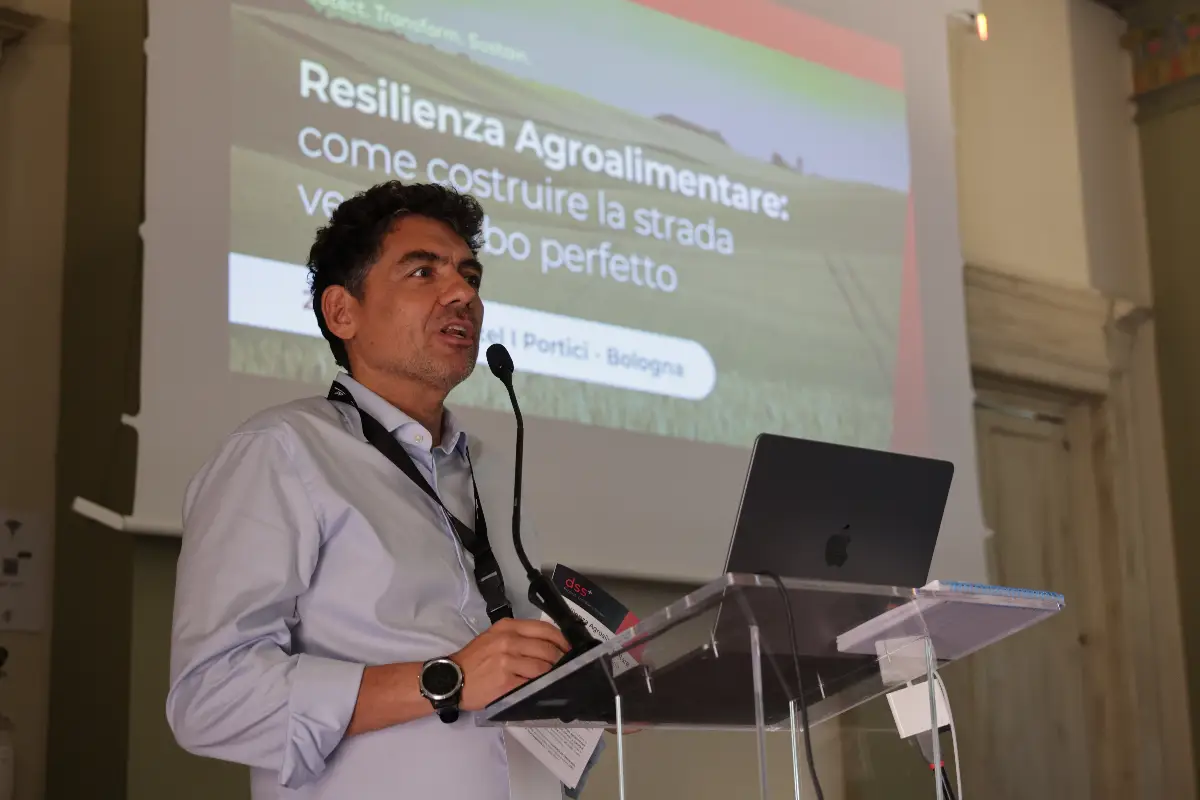
Towards the conference on "Agri-food Resilience. How to Implement Risk Management Solutions Along the Supply Chain" (Bologna, March 3, 2026, Hotel I Portici, Via Indipendenza 69, from 10:00 a.m. to 4:00 p.m.).
The program for the conference on "Agri-food Resilience. How to Implement Risk Management Solutions Along the Supply Chain," organized by dss+, is now outlined. The conference will take place in Bologna on March 3, 2026, at the Hotel I Portici, Via Indipendenza 69, from 10:00 a.m. to 4:00 p.m..
dss+ is an international consulting firm with a strong focus on risk and, above all, on the implementation processes needed to support organizational transformation, including reducing business risk exposure.
As Massimo Marino , one of the Food Industry leaders at dss+ and the conference's promoter, explains, "Addressing and managing risks and finding effective solutions throughout the various stages of the agri-food supply chain has become a strategic issue for the food sector. Food production is indeed at risk. On the one hand, transformation processes must respond to daily challenges primarily related to cost control and the ever-increasing need to comply with food safety requirements, improve operational efficiency, and protect workers' social conditions. On the other, the supply of raw materials is increasingly affected by the effects of climate change as well as the challenging global geopolitical situation. These are the issues at the heart of our conference."
The day will be organized into two parts. The morning plenary session will focus on strategically discussing the main risk-related issues, while the afternoon's parallel roundtable discussions will analyze possible solutions for the two main phases of the supply chain: primary production and industrial transformation.
"Agricultural and livestock production," Marino explains, "is affected by climate change and a challenging geopolitical situation. We can't change the causes, but we can implement defenses. Digitalization, regenerative agriculture, and supply diversification: these are some of the tools whose implementation will be the focus of an initial discussion."
As for industrial transformation, cost control and regulatory compliance are key elements to ensuring the efficiency of industrial processes. "This operational efficiency," Marino continues, "is supported by structured, often complex organizational systems, which, however, depend largely on the work of people, even more than on machines. This is why it is essential to invest in corporate culture, developing skills and increasing operator awareness and involvement. But how can we translate all this into concrete actions? We'll discuss this at a later meeting."
Among those already confirmed: Claudio Mazzini, Coop Italia, Leonardo Mirone (Barilla), Giovanni Causapruno (xFarm), Stanislao Fabbrino (Deco Industrie - Fruttagel), Luca Lovatti (Consorzio Melinda), Antonio Salvatore (Op Oasi), Giancarlo Addario (Maia Ventures), and Paolo Bulgarelli (Lactalis Italia).
For information : francesca.berretta@consultdsscom
The event is free to attend, subject to availability. To register :
https://mkt.consultdss.com/resilienza-agroalimentare-event?utm_source=PRMagazine