



It does not receive public funding
Editor in chief:
CLARA MOSCHINI
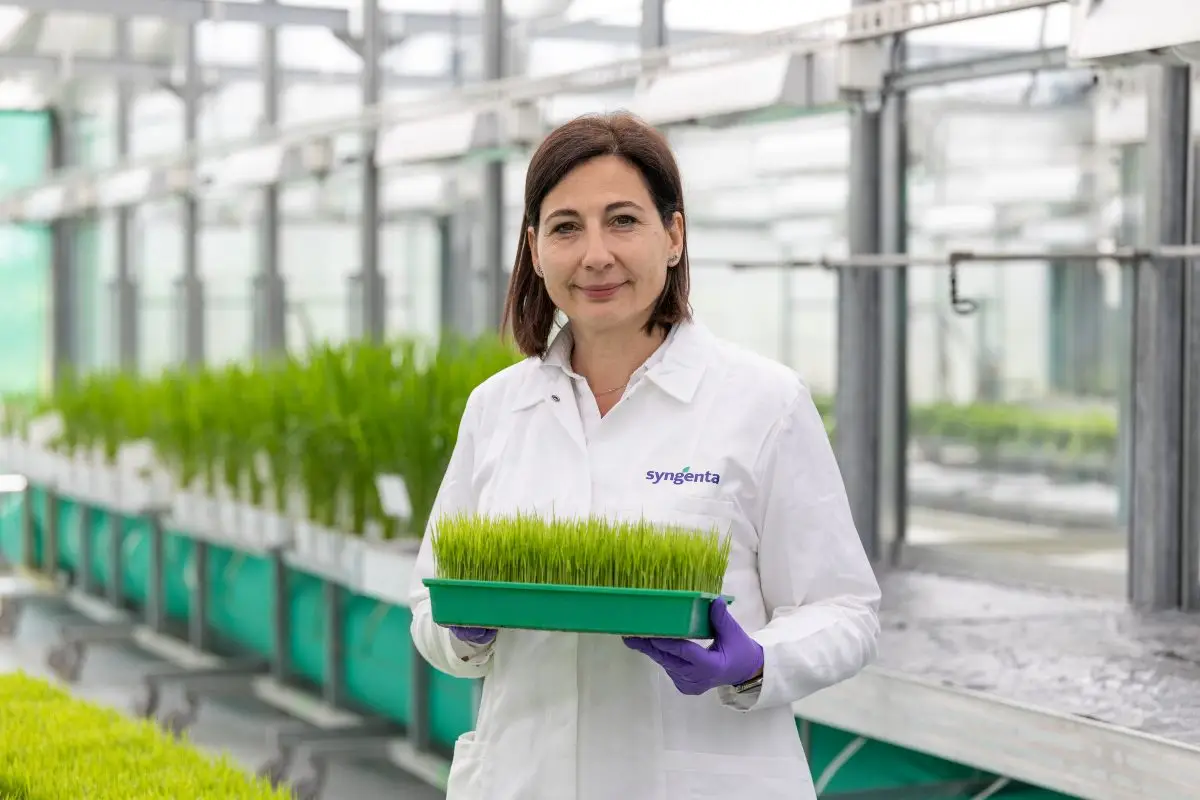
Camilla Corsi, Syngenta's global head of crop protection research and development, has been recognized by the American Chemical Society, one of the world's largest scientific societies, for her work in crop protection research. Together with Syngenta, Corsi consistently invests in key technologies to make agriculture more productive, sustainable, and resilient in the face of climate change and resource pressure.
A chemist by training, Camilla Corsi joined Syngenta in 2004 after earning her bachelor's degree from the University of Florence and her PhD from University College London, UK. Over the years, she rose through the ranks, eventually becoming Head of Crop Protection Research & Development in 2025, a role in which she leads a team of over 3,000 people across 51 countries. Corsi was also appointed to Syngenta Group's Extended Global Leadership Team in January 2025 and is a member of the company's Innovation Board.
Over his twenty-year career, Corsi has made fundamental contributions to food security, starting with the fight against fungal infections, which are estimated to destroy between 20 and 40% of the annual global crop, resulting in the loss of food that could feed between 600 million and four billion people each year. For example, Corsi contributed to the discovery of the fungicide pydiflumetofen (Adepidyn technology), the insecticides isocycloseram (Plinazolin technology) and spiropidion (Tinivion technology), as well as the novel nematicide cyclobutrifluram (Tymirium technology). Together, these Syngenta technologies represent a new generation of crop protection treatments, providing powerful control of diseases, pests, and nematodes across a wide range of crops and geographic areas.
Alongside her love of science, Corsi has also been committed to promoting STEM disciplines among younger generations, especially women. She also co-sponsors Syngenta's Women Leading in Science network.
Syngenta boasts the most advanced research and development pipeline in the crop protection industry, with an annual investment in R&D of up to $2 billion: a commitment that is expected to lead it to launch at least 20 new proprietary innovations in crop protection and biologicals over the next ten years.
Crop protection is one of the most regulated industries in the world. To obtain and maintain registration, a chemical must be safe for farmers, the environment, crops, and consumers. According to the latest industry data, the average cost of bringing a new crop protection product to market exceeds $300 million, often taking more than 10 years to reach commercial launch. Syngenta operates globally in the crop protection market and offers farmers a wide range of solutions to increase yields while reducing environmental impact.
In addition to agrochemicals, Syngenta is also investing in biological solutions and placing significant emphasis on artificial intelligence across the entire supply chain. Machine learning is accelerating the discovery of new active ingredients, while generative design is bringing better products to market faster. In the field, drone surveying, combined with AI-generated agronomic advice, is optimizing farming operations and making precision agriculture accessible at scale. Finally, at the operational level, AI-based demand forecasting is streamlining logistics networks and improving supply chain efficiency. Together, these advances represent a quantum leap in the potential of modern agriculture.