



It does not receive public funding
Editor in chief:
CLARA MOSCHINI
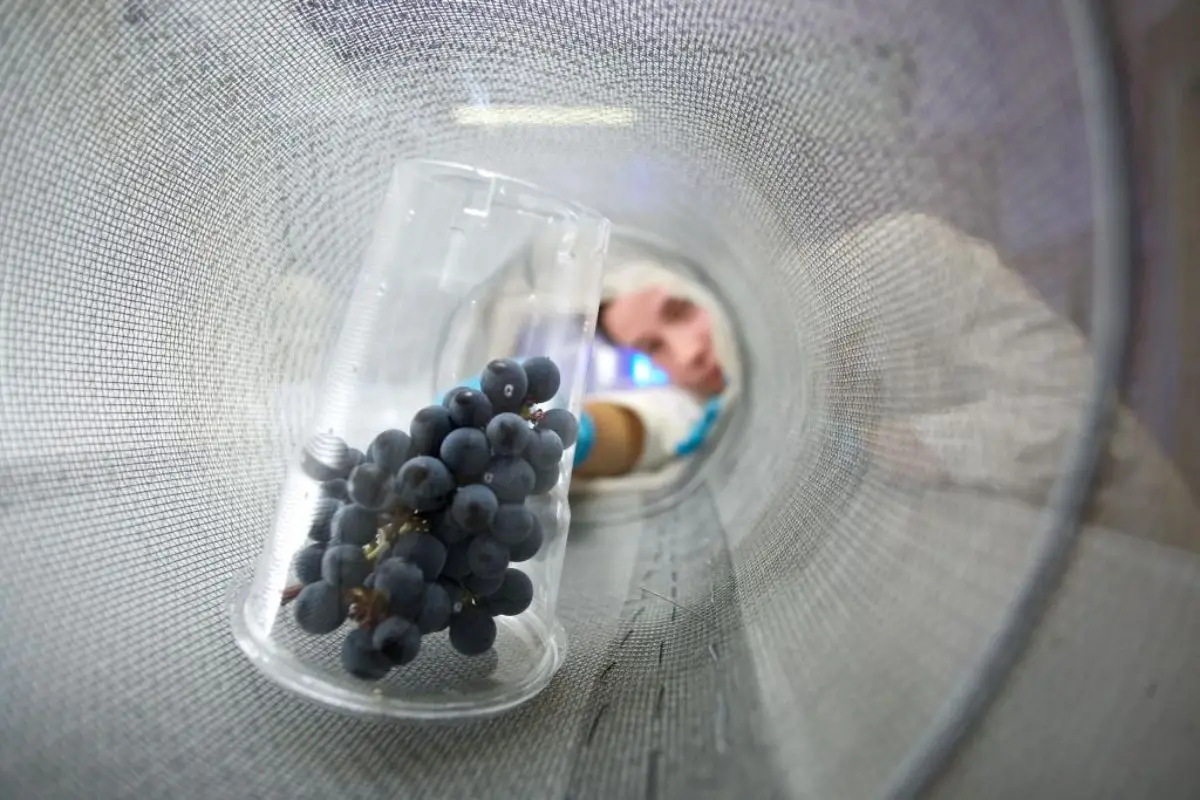
The Edmund Mach Foundation has created the first metabolomic map of grape varieties worldwide. This is a significant achievement for viticulture and oenology research, the fruit of analysis and research within the "Grape Metabolome" project, which made the cover of the International Journal of Agriculture and Food Chemistry.
Based on analyses conducted on 126 grape varieties from around the world, researchers have effectively constructed a map of the relationships between varieties not based on DNA (genetic map), but on their metabolic composition—a sort of chemical map of the grape, a precise snapshot of all the molecules that compose it. This new perspective combines genetic information with metabolomics, creating a bridge between genotype and phenotype. This atlas will soon be available to winemakers worldwide, who will have greater knowledge and insight into grape varieties and therefore their winemaking potential.
“This is the first holistic approach to detecting all the compounds present in a product, in this case the grape,” explains General Manager Riccardo Velasco . “This allows us to see all the similarities but also all the differences between two elements under comparison, in this case the grape varieties, as well as having identified new, previously unknown compounds.”
The metabolome, in fact, is the set of compounds and chemical substances produced by the plant and contained in the grape, such as sugars, acids, polyphenols and aromatic precursors. Fem is equipped with cutting-edge instruments and expertise in this field of research.
This study reveals that grape varieties don't just differ in DNA, leaf shape, or grape appearance, but each has its own varietal metabolomic signature. For example, it was discovered that Teroldego, Lagrein, and Marzemino grape varieties have a similar metabolome, as do Bordeaux varieties with Cabernet Franc and Merlot, and Vermentino with Xarello, or Manzoni with Riesling. Panagiotis Arapitsas, head of the Metabolomics Unit at the Research and Innovation Center, explains that the research results indicate that this signature is strong enough to allow varietal groups to be identified using their chemical composition alone.
From an oenological perspective, each variety arrives in the cellar with a distinctive chemical profile, which represents the raw material from which the wine will be born. The map therefore offers a new way to study why some grapes have similar characteristics while others are chemically very different. This provides a better understanding of the history, evolution of the vine, and the origins of modern varieties, offering winemakers a tool for finding alternative varieties without losing the identity of the wine they produce.
The study revealed that aromatic varieties—such as the various Moscatos, Malvasias, Gewürztraminers, and so on—have such a distinctive metabolomic profile that they form a clearly recognizable group, beyond the color of the berry: in the same metabolomic space, aromatic varieties with white, pink, or red berries can be found side by side. Their common element, therefore, is not color, but a specific biochemical identity, with metabolites linked to aroma and its precursors.