



It does not receive public funding
Editor in chief:
CLARA MOSCHINI
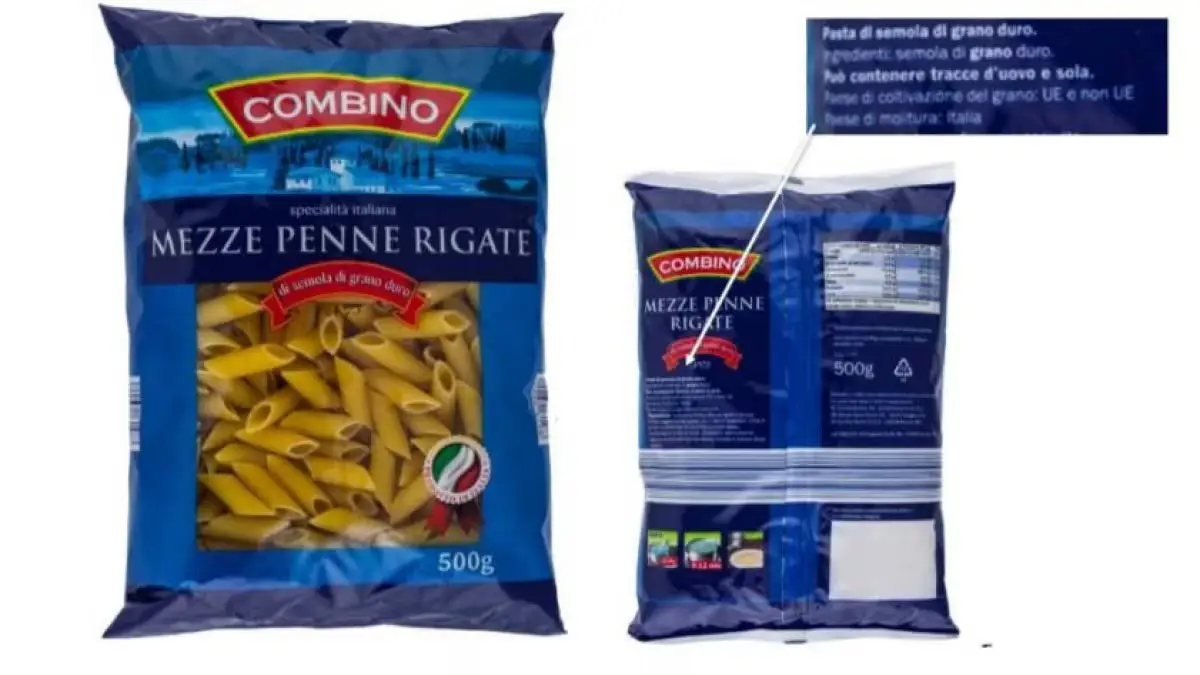
Italian-made pasta always wins. This was confirmed by the Court of Justice of the European Union, which has put an end to the long legal battle over Lidl-branded pasta, or rather the use of "patriotic symbols" to disguise the foreign origin of the wheat. With ruling C-301/25, the Luxembourg judges ruled in favor of the Italian Competition Authority (AGCM), reaffirming the legitimacy of the €1 million fine imposed on the supermarket chain.
The proceedings began on April 24, 2025, with a request for a preliminary ruling from the Court, involving Lidl Italia Srl against the Italian Competition Authority (AGCM) against Wiise Srl, an Association for the Defense and Orientation of Consumers (ADOC Aps). As stated in the ruling issued a few days earlier, on April 30, 2026, the request was submitted "in the context of a dispute between Lidl Italia Srl and the Italian Competition Authority (AGCM), concerning an administrative fine imposed by the latter on Lidl Italia due to an unfair commercial practice in the marketing of durum wheat semolina pasta lines."
When asked for comment, Lidl Italia responded that it preferred not to comment.
In reality, the dispute dates back even further, to 2020, when the Antitrust Authority targeted several pasta manufacturers: in addition to Lidl's Combino and Italiamo, De Cecco, Divella, and Cocco. The accusation was "misleading labeling": the labels on the packaging, according to the Antitrust Authority, claimed the product was Italian, even though, looking at the ingredients, it used wheat from both EU and non-EU sources.
More specifically, regarding Lidl, the dispute centered on the Italiamo lines, featuring the Italian flag and the words "Passione Italiana" on the packaging, and the Combino line, featuring images of Italian landscapes and the words "Specialità Italiana." In both cases, the Antitrust Authority determined that the emphasis on "Italianness" misled consumers, as the wheat used was largely foreign, sourced from both EU and non-EU countries. According to the Italian Antitrust Authority, this information appeared only on the side or back, in very small, hard-to-read lettering.
As "Il fatto alimentare" reports in its summary of the case, Lidl's defense was based on formal compliance with EU Regulation 1169/2011.