


It does not receive public funding
Editor in chief:
CLARA MOSCHINI
The downsizing of Tagliatelle packaging, which has led to a saving of 150 tons of cardboard and a 20% reduction in CO₂ emissions related to transportation; the jars for ready-to-eat sauces are made from approximately 65% recycled glass; the use of regeneratively farmed soft wheat flour for Buongrano; and the projects to integrate people with autism into some factories. These are just some of the "sustainability stories" the Barilla Group is presenting on World Environment Day with the publication of its 2025 Sustainability Report. This report comes in the aftermath of its recognition as the world's leading food company by reputation for the third consecutive year and, for the first time, in the top 10 overall, according to the Global RepTrak 100 2026.
“The future of the planet will be increasingly linked to the ability to spread culture and education,” says Paolo Barilla , Vice President of the Barilla Group. “For Barilla, this means caring for communities, promoting good values, and investing in technologies and production that protect the environment and are attentive to people's health.”
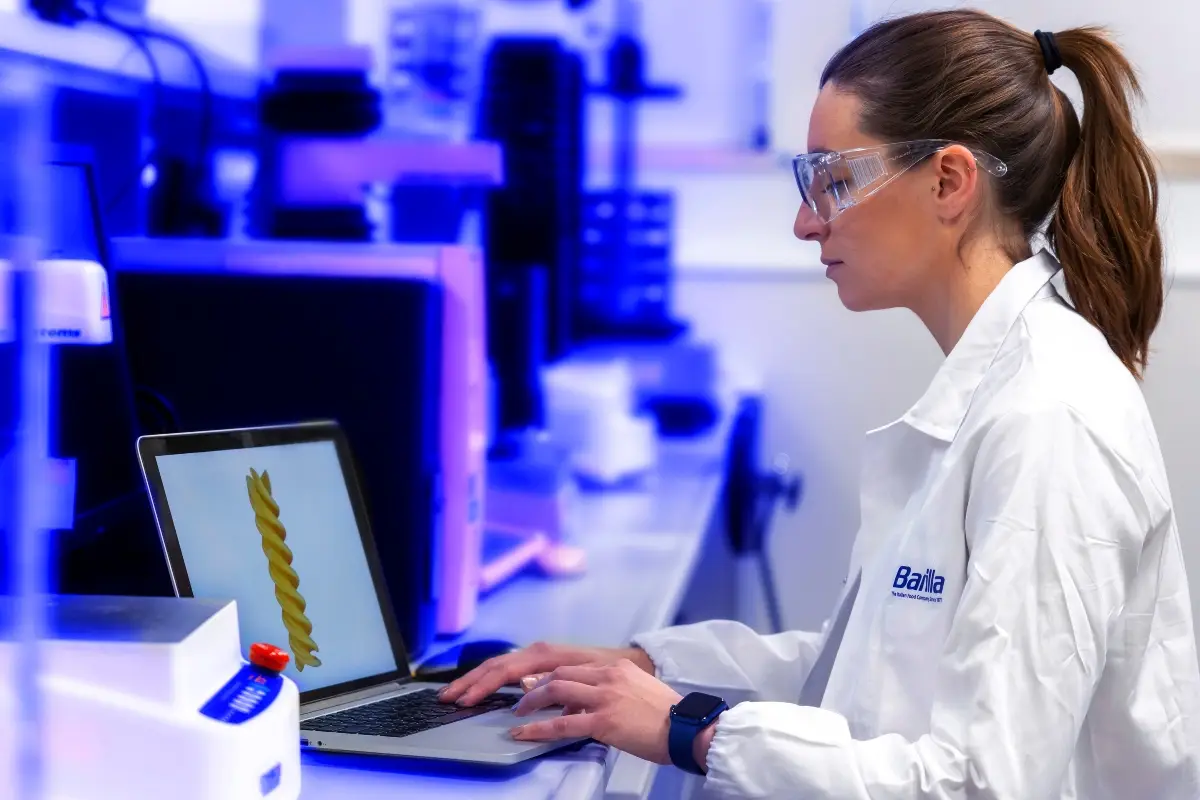
Passion for good food has driven Barilla to improve the nutritional profile of its entire portfolio without sacrificing taste: 89% of volumes sold contain a maximum of 5 grams of sugar per serving, 90% contain no more than 0.5 grams of salt per serving, 90% contain sources of fiber, and 72% of baked single-serving products contain less than 150 calories. It is the same kind of passion that drives the company towards innovation, with an investment of over €47 million in Research, Development, and Quality by 2025. A symbol of this commitment is Bite (Barilla Innovation & Technology Experience), the Group's new global innovation hub established in Parma next to the long-standing pasta factory. Here, ideas turn into prototypes and industrial processes, all thanks to the work of over 200 professionals, including food technologists, researchers, food designers, chefs, and sensory experts, as well as a collaborative network of 84 universities and research centers.
On the energy front, €30 million has been invested as part of the €168 million five-year plan by 2030 for Barilla's production plants, focusing on energy efficiency, more careful management of water resources, and the development of renewable energy plants. In 2025, five new plants were activated in Foggia, Melfi, Ascoli Piceno, Cremona, and Thiva, Greece, bringing the installed photovoltaic capacity at the plants to over 8 MW, more than four times the 2022 figure. Further installations are planned between 2026 and 2028 at the bakery plants in Novara and Celle, Germany. Equally significant is the work on water saving: in plants located in water-stressed areas, recycled and reused water increased by 196% compared to 2022, aiming for a 250% increase by 2030.
Attached to this EFA News is the full text of the Barilla Group's "Our Sustainability Stories - 2025."