



It does not receive public funding
Editor in chief:
CLARA MOSCHINI
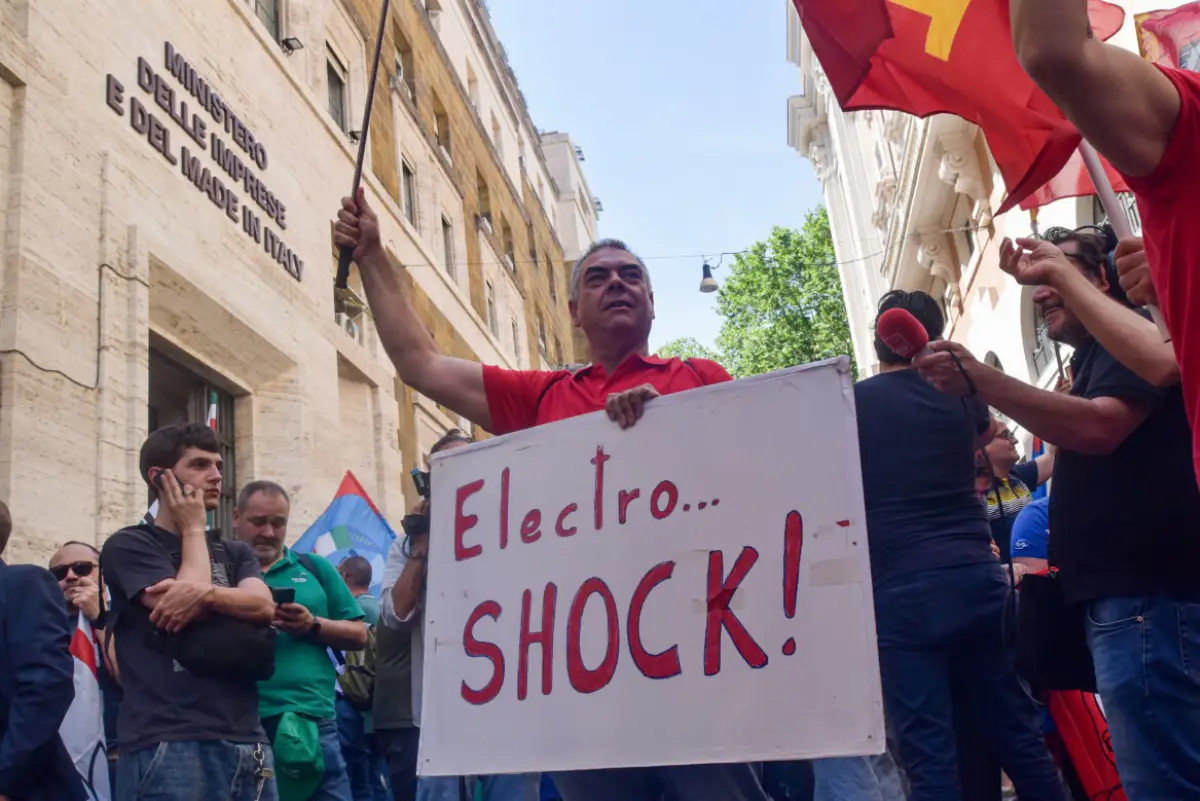
Yesterday, Sunday, September 6, the Minister of Enterprise and Made in Italy, Adolfo Urso , had a telephone conversation with the presidents of the regions affected by the Electrolux dispute: Marche, Emilia-Romagna, Lombardy, Friuli-Venezia Giulia, and Veneto. Urso outlined the status of negotiations with the company, including discussions with the trade unions at the Ministry of Mitigation and Mitigation (MIMIT). During the meeting, the minister agreed with the governors to meet via video link at the Ministry of Mitigation and Mitigation for tomorrow, Tuesday, September 8, with the aim of continuing discussions and strengthening coordination between the government and the regions on the matter.
Furthermore, an update was given on the progress of the non-paper promoted by the Italian government, which urges the European Commission to adopt urgent measures to protect the production of household appliances in Europe.
The MIMIT decision follows two days of negotiations between the company and unions at the Ministry of Enterprise and Made in Italy, which ended essentially in a stalemate. The joint statement from FIM, FIOM, and UILM states that "Electrolux has summarized and detailed the plan for each Italian plant, with some minor changes."
In fact, the unions argue, the Swedish company "not only reiterated its call for the government to address fundamental issues affecting competitiveness, particularly to take action at European level to reform the CBAM, but also added its intention to override union agreements on work organization, which currently place specific limits on assembly line production rates for each factory, establishing a maximum number of parts to be assembled per hour."
Electrolux, in effect, the unions say, "declared its intention to increase production rates, through ergonomic improvements and compliance with maximum load limits, up to a maximum of 140 pieces per hour. Furthermore, the factories would be stabilized with a single, so-called "day shift."
"In the face of such overwhelming demands," the union statement states, "Electrolux is offering only limited changes to its industrial plan and confirming the closure of the Cerreto d'Esi site in the province of Ancona. Overall redundancies in Italy have dropped from 1,719 to 1,450, but to this number must be added 135 fixed-term contracts expiring and not being renewed. Furthermore, the permanent workforce itself has dropped from 4,279 to 4,200 from April to August, while 91 fixed-term contracts have already expired without renewal."
"We express our firm opposition," the unions wrote, "to a corporate position that would require great sacrifices from workers and enormous efforts from the government, but in exchange would paradoxically continue to offer redundancies and layoffs. Therefore, Electrolux's infamous industrial plan has not only not been withdrawn, but has, in fact, largely been confirmed."
"For this reason," the union statement reads, "we believe the so-called 'technical' discussions are over and we are calling for an urgent reconvening of the meeting with the minister and the affected regions, so that together we can use every possible lever to persuade the multinational to change its mind. In the meantime, we are declaring an eight-hour strike, with modalities to be specified, and a continuation of the state of unrest."