



It does not receive public funding
Editor in chief:
CLARA MOSCHINI
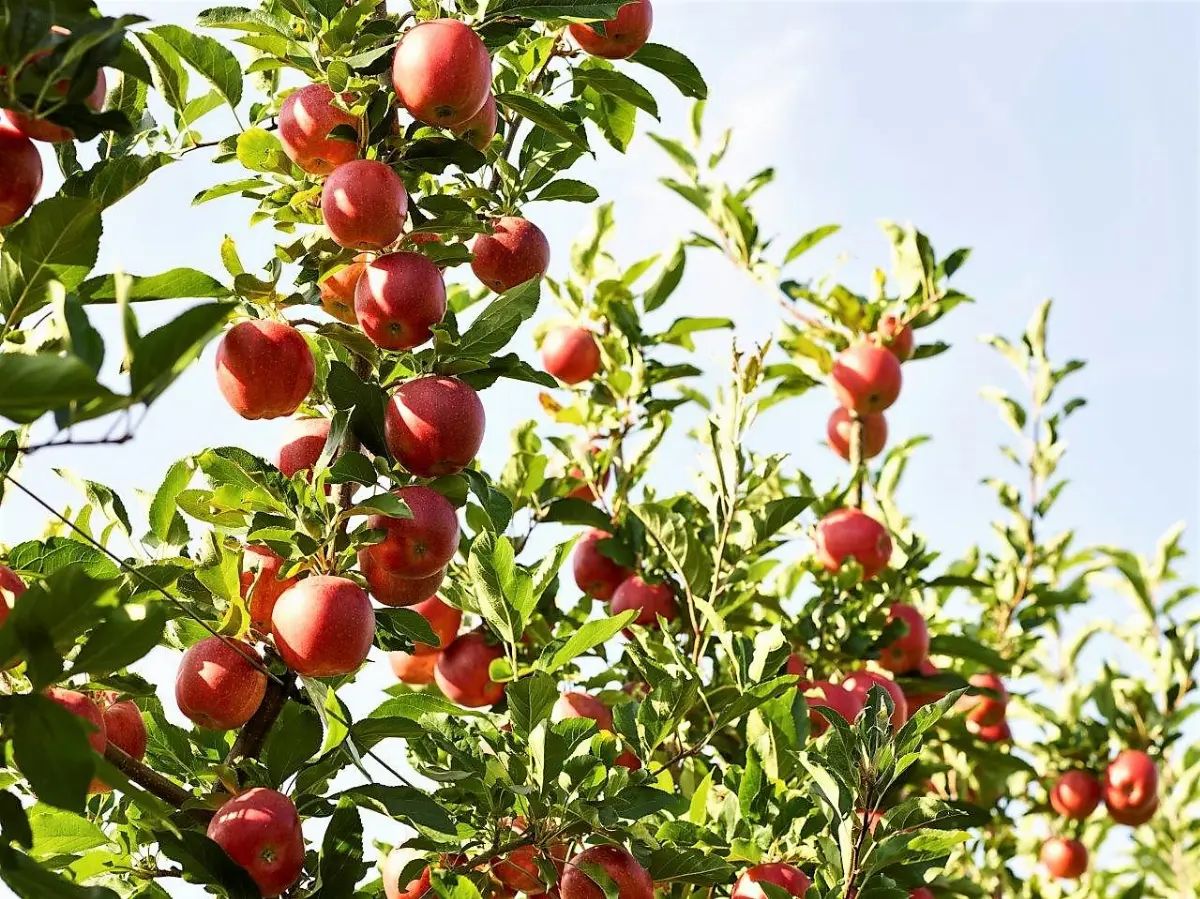
According to the latest estimates from the World Apple and Pear Association (WAPA), reported by ISMEA, European apple production for the 2025/26 crop year is expected to stand at just under 11 million tonnes, a 5% increase compared to the forecast released in August. The increase is linked to more favorable weather conditions in late summer, which allowed for improved size and color of medium- and late-ripening varieties. The increase in estimates primarily concerns Poland, with an increase of approximately 400,000 tonnes, followed by Germany (+70,000 tonnes) and, to a lesser extent, Belgium, the Netherlands, and France.
Globally, international trade in apples amounts to approximately 7 million tons, for a total value of €7,077 million. In the 2024/25 marketing year, Italy is the world's leading exporter, with shipments worth €1,173 million and a 16% value share, followed by the United States (14%) and China (13%). Rounding out the top ten are New Zealand, Chile, South Africa, Poland, France, the Netherlands, and Turkey, which together account for a significant share of world trade, though they remain distant from the three leaders.
According to ISTAT data, in recent years, the area of apple orchards in production in Italy has stabilized at around 54,000 hectares, with a marked concentration in the autonomous provinces of Bolzano and Trento, which alone account for 49% of the national total. Piedmont, Veneto, and Emilia-Romagna follow, collectively accounting for approximately 30% of the production potential, while Campania maintains a distinctive role thanks to the production of the Annurca variety. Overall, there are no significant changes in production potential compared to 2024, nor compared to the average of the last three years.
For 2025, Assomela estimates national production of 2,317,545 tons, in line with the previous year and approximately 5% higher than the 2022-2024 average. Regionally, Alto Adige remains the leader with 46% of the national harvest, followed by Trentino (22%), Piedmont (11%), Veneto (9%), Emilia-Romagna (8%), and Friuli-Venezia Giulia (2%); Campania and other regions bring up the rear with smaller shares. Compared to 2024, in 2025 production increased in Alto Adige, Trentino, Campania, and Lombardy, while it decreased in Piedmont, Veneto, and Friuli-Venezia Giulia.
The overall quality of apples was very good for all major varieties. The quantity destined for the fresh market reached 2.037 million tons, up 2% from 2024 and 9% from the average of the last three years. Organic production stood at 174,599 tons, down 6% from 2024. From a varietal standpoint, Golden Delicious remained the most represented cultivar, followed by the Gala group and the Granny Smith, Fuji, and Red Delicious trio. The supply of new varieties exceeded 300,000 tons overall. Estimates remain partial and will be updated as data on areas and late-ripening varieties becomes available.
Among Italian fruit and vegetable products, apples continue to have the best trade balance. In the last season, from August 2024 to July 2025, Italy recorded a record surplus of €1.146 billion, thanks to the export of 1.068 million kg of apples. This is a historic volume, second only to the 1.086 million kg exported in the 2016/17 season. Compared to the previous season, the trade balance increased by 19%, reaching its highest level ever.
The 2025/26 marketing campaign for Italian apples has started on a positive note, confirming many of the favorable trends observed in the previous season. Quantitatively, the national supply of table apples is very similar to last year, while the overall quality profile is high, with a good distribution of sizes.
On the varietal front, the availability of club apples (protected by a variety patent) continues to grow, allowing for a more thorough segmentation of the offering and the adoption of more targeted marketing strategies. Sales within the organized apple growing system have shown a positive trend since the beginning of the season, particularly in the Italian market, with a destocking rate essentially in line with that of the previous year.
Shipments to non-EU markets are also progressing strongly. An encouraging sign comes from the reopening of the Suez Canal, which has allowed some cargoes to transit again after a period when the route was nearly impassable, significantly impacting logistics times and transport costs. At the same time, industry operators are actively seeking new outlets in third-party markets, with particular attention to Central and South America.