



It does not receive public funding
Editor in chief:
CLARA MOSCHINI
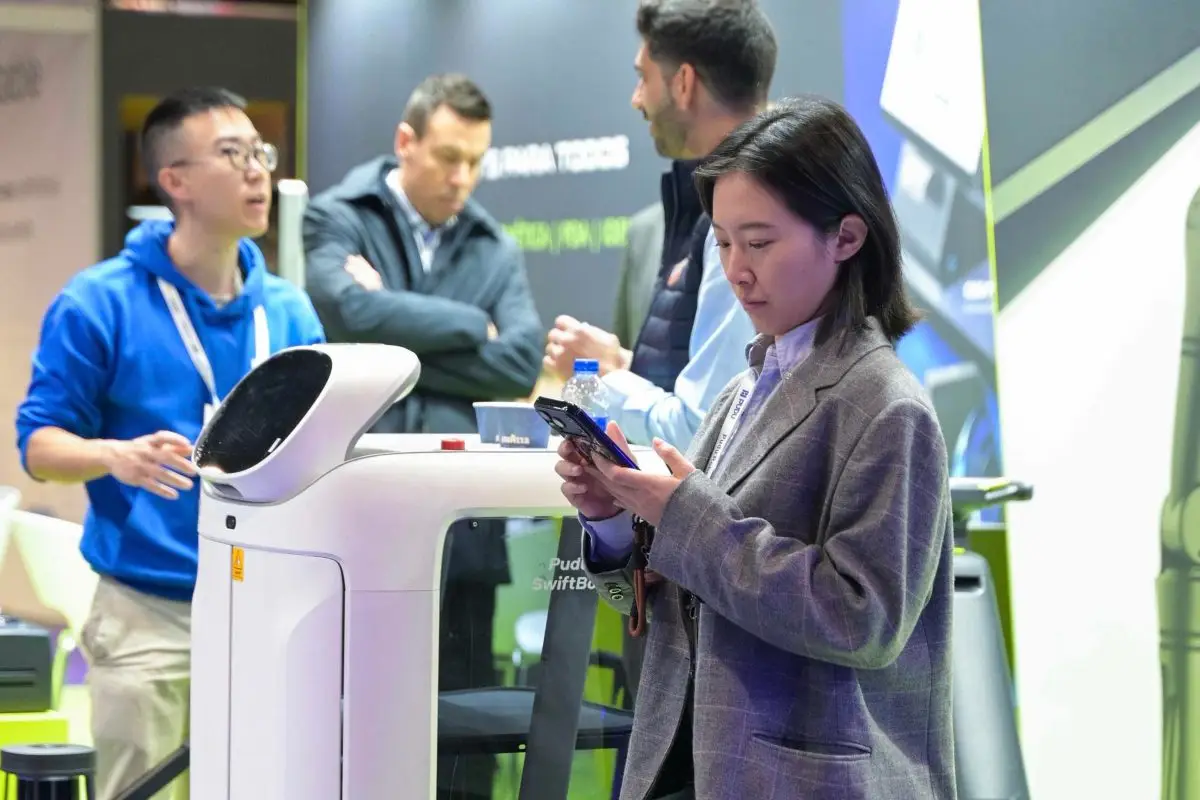
Artificial intelligence that responds to guests and manages reservations; robots that assist staff with repetitive tasks; and professional kitchens that are increasingly connected and automated. The technological transformation of the Horeca industry is already underway, and the challenge for businesses is no longer simply identifying available innovations, but understanding how to integrate them into processes to generate value, improve productivity, and maintain the quality of the experience at its core.
This will be one of the topics that HIP - Horeca Professional Expo, scheduled to take place at BolognaFiere from October 19 to 21, 2026, will highlight at the Hospitality 4.0 Congress, a conference program that will bring together over 400 international experts and speakers, featuring more than 20 summits, 4 auditoriums, and over 120 sessions dedicated to the transformation of the hospitality and foodservice industries.
“At Hip, we want to bring this debate to a more concrete level: what problems can we solve, how much time can we give back to people, which processes can we make more efficient, and how can we use technology without losing the value of the experience and the relationship with the guest,” says Manuel Bueno, director of HIip Italia.
A major focus will be on artificial intelligence and its impact on hospitality. Chatbots, virtual assistants, and intelligent systems are now able to interact directly with guests, respond to their requests, and support various stages of the customer relationship. Alessandro Zucconi, Professor of Digital Tourism at the University of Rome Tor Vergata, Mariangela Colasanti, Head of Innovation at BWH Hotels, and Giacomo Pini, CEO of GPstudios, will focus the discussion on the value AI is already generating and an increasingly relevant issue for businesses: when a machine speaks on behalf of a brand, the language, responses, and decisions must remain consistent with the company's identity and be governable by the organization.
AI will also be analyzed as a productivity lever. Andrea Saravalle, Strategic Advisor & University Lecturer at the University of Bologna, will delve into the use of automation in reservations, check-in, pricing, and coordination, with the aim of understanding how the time freed up by technology can be reinvested in service and guest relations.
Alongside AI, Hip will address the evolution of service robotics, which is gradually moving from a pioneering phase to a phase of wider adoption. Delivery, transportation, and operational support robots can take on repetitive tasks and help redesign some hospitality processes.
The topic will be the focus of the Foodservice Robotics Pioneers Forum, organized in collaboration with José Visiedo, founder of Tip Top, which will delve into the practical aspects of integrating robotics in the Horeca sector, from planning to deployment to day-to-day management, connecting technology, people, spaces and service objectives.
Furthermore, Annibale Linguanti, Founder & Development Manager of the One brand, a member of Una Hotels and a pioneer of hotel robotics in Italy, will focus on leadership, training, and corporate culture, the key elements for transforming a robot from a simple technology into a truly integrated service tool.
The adoption of robotics will also be addressed from a technological perspective in the session with Sabrina Melidoni, Business Development Manager at ZCS, and Alessio Polloni, Sales Director of the ZCS Software Division. The discussion will analyze the role of integration between robots, software, applications, APIs, and management systems, demonstrating how incorporating robotics into a digital ecosystem can increase its usability and scalability.
Technological transformation is also impacting the professional kitchen. Therefore, the Smart Kitchens Forum, co-organized with Luca Salomoni, representative of FCSI EAME, will address how automation, IoT, and intelligent systems are transforming production methods, energy consumption monitoring, cooking scheduling, and workflow organization.
Alessandro Tison, Operative Kitchen Consultant at Altis, Davide Pivetta, Professional Kitchen Designer at Pivetta Grandi Cucine Consulting, and Alexander Hofer, CEO of H44Team, will present concrete applications of these technologies in the kitchen, with the aim of improving efficiency, sustainability and quality of service.
In the transformation of the restaurant industry, two different models are emerging: on the one hand, the standardization and scalability of the American model; on the other, the flexibility and adaptability typical of the European model. Through the Fit Kitchen model, Adrià Navarro, General Manager of Welbilt Iberia, will explore how to combine both approaches to build the kitchen of the future, leveraging automation, efficiency, and profitability without sacrificing quality or the central role of people.